
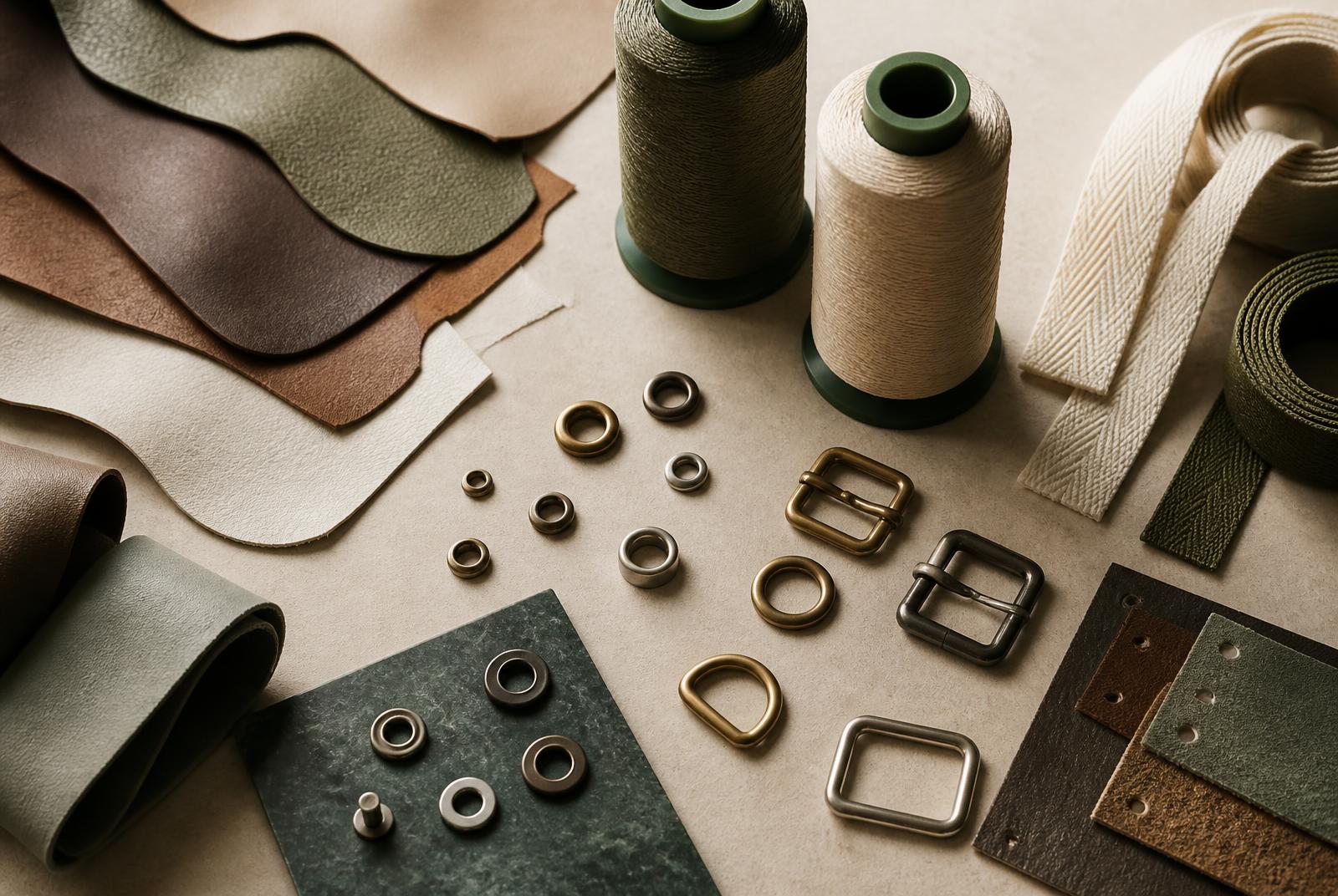
The transformation of footwear begins long before the finished product. It begins with the material.
The choice of a leather, a thread, a component or a technical solution can affect workability, performance, durability, appearance and the production process itself.
In recent years the industry has rapidly widened its field of research, exploring natural fibres, recycled materials, plant-based alternatives and new technical solutions.
According to a recent World Footwear survey, the trends industry operators consider most relevant for the coming years include sustainable natural fibres, plant-based leather alternatives and recycled plastics.
The question, however, is not simply “what will the next material be?”. The more interesting question is: how will the way we select and use materials change?
From material to performance
Every material carries specific characteristics: weight, strength, flexibility, workability, appearance, durability and compatibility with given production processes.
This is why material selection cannot be separated from knowledge of the process. A material that looks promising on paper may not be the right answer for every application.
The real evolution therefore lies in the ability to connect material, process, function and result.
New fibres and alternative materials
Research is widening the range of possibilities available to designers and manufacturers.
- Natural fibres from a range of sources
- Recycled materials
- Bio-based solutions
- Alternatives to traditional leather
- New formulations for foams and components
There is no universal solution. Each material has to be assessed against its intended use, the required technical properties, the process and the final result. That makes supply-chain knowledge even more important.
Sustainability is not only a question of material
Talking about sustainable materials means avoiding shortcuts. A product's sustainability depends on many factors: raw material origin, production processes, durability, repairability, recovery options, composition and end of life.
The future of manufacturing will therefore not be decided only by the search for the “most sustainable material”. It will be decided by the ability to design and produce with the whole life cycle in mind.
Expertise becomes central again
The more options there are, the more it matters to know how to choose. For manufacturers, that means understanding not only what a material is, but what it can do.
Supply-chain expertise thus becomes strategic. Knowing materials, components, tools and how they are used makes it possible to address different production needs with greater awareness.
The future of manufacturing
It will probably not be defined by a single material. It will be defined by the ability to select, combine and use different materials with growing awareness.
Materials will keep changing. The expertise needed to transform them will remain essential.
The future of manufacturing will not be defined by a single material.
In summary
- Materials research is widening what manufacturing can do.
- Natural fibres, recycled materials and bio-based alternatives are drawing growing attention.
- Sustainability must be assessed across the whole life cycle.
- Material choice has to be connected to function and process.
- Supply-chain knowledge matters more and more.
Sources
- World Footwear — Business Conditions Survey / New footwear material trends revealed by industry survey.